The Sacrifice of Incense

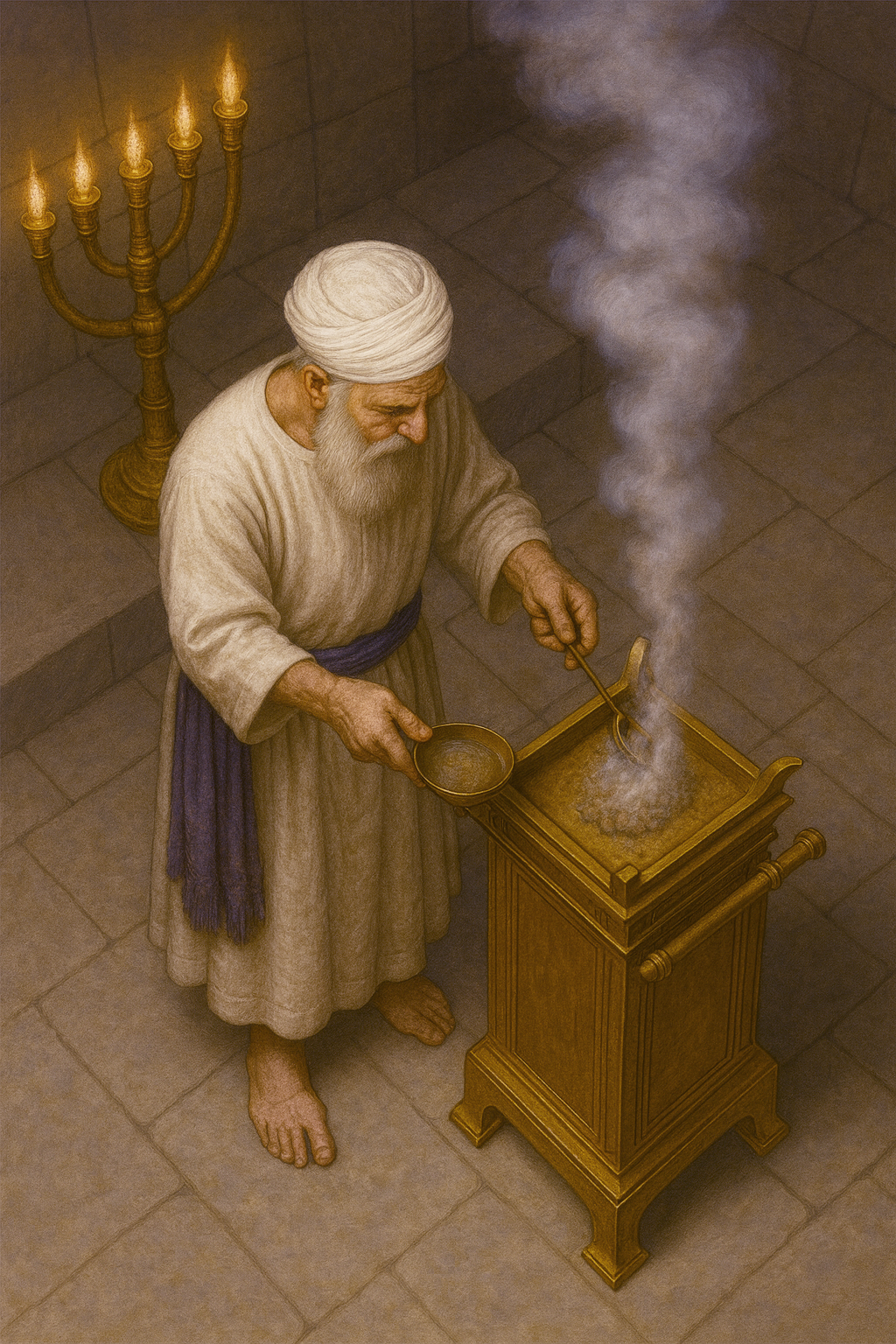
The sacrifice of incense was a daily temple ritual where priests burned a holy blend of spices on the altar of incense, symbolizing the prayers of the people rising to God.

People, Places, and Things

The Sacrifice of Incense

Looks like you don't have a membership. This contnet is limited to members.

Join the conversation and start understanding the Bible.

People, Places, and Things

The Temple in Jersualem

The Jerusalem Temple in the first century was the spiritual, cultural, and architectural heart of Jewish life, rebuilt by Herod into a magnificent complex that symbolized God’s presence, united a dispersed people, and ultimately became a focal point of both worship and conflict until its destruction in AD 70.

Days of Perification

In Luke 2, the days of purification reflect the First Century Jewish law requiring a mother’s ritual purification and the presentation of the firstborn male at the temple, demonstrating faithful observance of Mosaic customs.

Caesar Augustus

In Luke’s Gospel, Caesar Augustus, Rome’s first emperor and bringer of the Pax Romana, is mentioned in connection with the census that brings Mary and Joseph to Bethlehem, highlighting how the emperor’s decree unknowingly fulfills God’s plan and contrasting Augustus’s claim to peace with the true peace brought by Jesus.

Tax Collectors

In the first century, tax collectors were despised as corrupt collaborators with Rome, yet in the Gospel story they become powerful symbols of repentance and God’s grace reaching even the most outcast.

Potius Pilate

Pontius Pilate was the Roman prefect governing Judea during Jesus’ ministry, responsible for maintaining order and overseeing Jesus’ trial and crucifixion under Roman authority.

Jordan River

The Jordan River is the Bible’s sacred threshold—where God turns wandering into inheritance and old life into new—from Israel’s crossing under Joshua (c. 13th century BC) to Jesus’s baptism (early 1st century AD).