Simeon

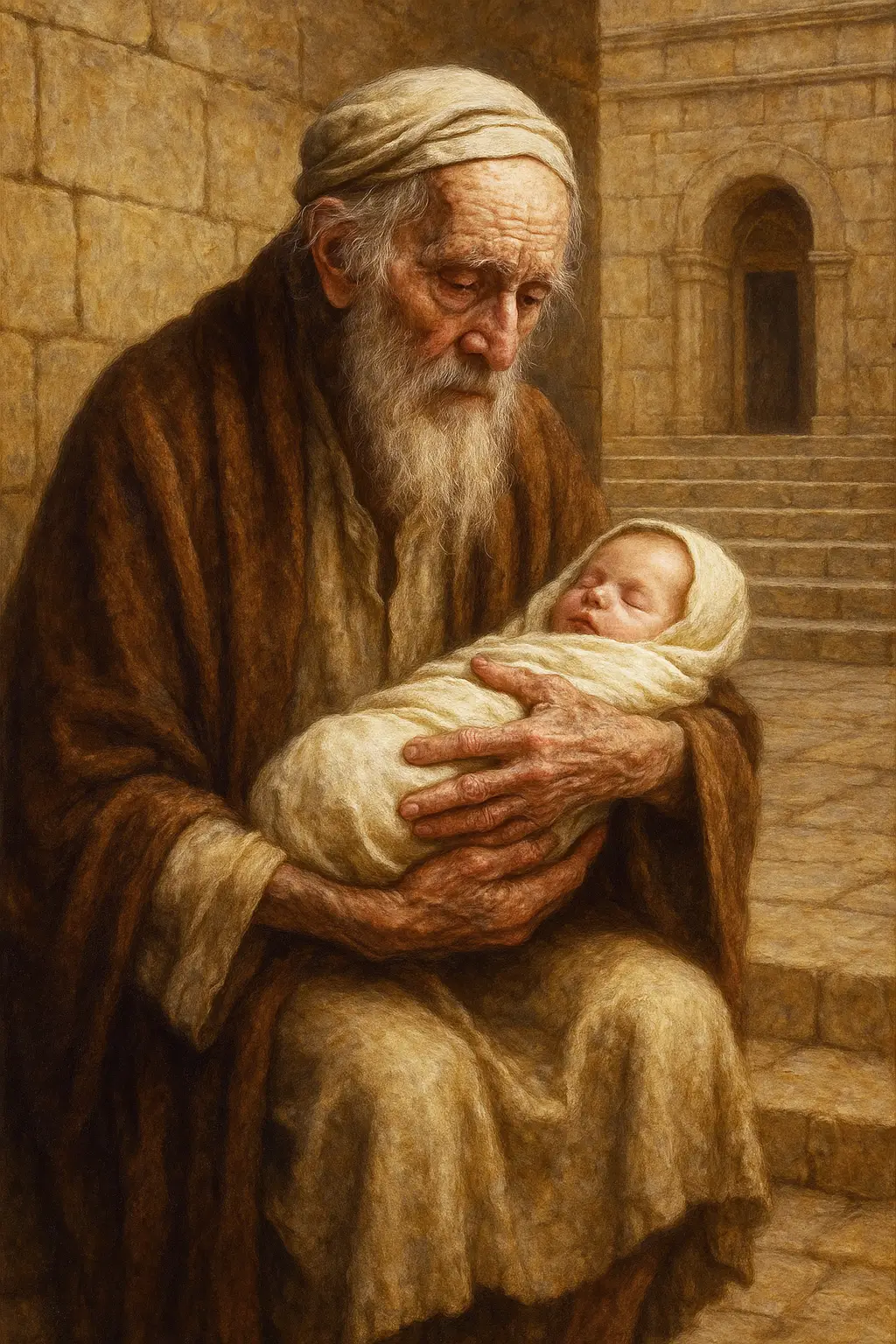
Simeon in Luke is a faithful, Spirit-led servant who recognizes Jesus as the promised Messiah, proclaiming salvation and foretelling the challenges to come.

People, Places, and Things

Simeon

Looks like you don't have a membership. This contnet is limited to members.

Join the conversation and start understanding the Bible.

People, Places, and Things

Leprosy

In the Gospel of Luke, leprosy—once a condition demanding priestly examination, isolation, and ritual cleansing under Mosaic law—becomes a powerful sign of Jesus’ authority to restore both body and community, as he touches the unclean, heals them instantly, and fulfills the law’s promise of true purification.

Jerusalem

In the first century, Jerusalem was the religious and cultural heart of Judaism, the political flashpoint of Roman-occupied Judea, and the pivotal stage for events that shaped both Jewish and Christian history.

Pharisees

The Pharisees in the first century were a respected Jewish religious group known for their strict adherence to the full Hebrew scriptures, oral traditions, belief in resurrection, and influence among the common people, yet they faced criticism from Jesus for elevating human traditions over God’s commandments.

Herod the Great

Herod the Great was the Roman-appointed king of Judea known for his grand building projects and ruthless rule, including the infamous massacre of infants in Bethlehem.

Caesar Augustus

In Luke’s Gospel, Caesar Augustus, Rome’s first emperor and bringer of the Pax Romana, is mentioned in connection with the census that brings Mary and Joseph to Bethlehem, highlighting how the emperor’s decree unknowingly fulfills God’s plan and contrasting Augustus’s claim to peace with the true peace brought by Jesus.

Scribes

In the first century, Jewish scribes were respected experts in the Law whose devotion to Scripture preserved Israel’s faith, yet in Luke’s Gospel they often clash with Jesus, revealing the tension between knowing the Law and recognizing the One who fulfills it.