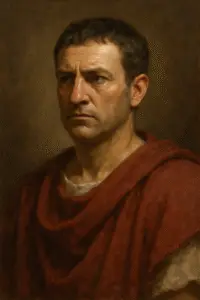
Tiberius Caesar

Tiberius Caesar was the Roman Emperor during Jesus’ ministry, whose reign provides a historical backdrop for key events in the New Testament, notably referenced in Luke as the time when John the Baptist began his ministry.

People, Places, and Things

Tiberius Caesar

Looks like you don't have a membership. This contnet is limited to members.

Join the conversation and start understanding the Bible.

People, Places, and Things

Herod Philip

Herod Philip the Tetrarch (4 BC–AD 34), son of Herod the Great, ruled peacefully over Ituraea and Trachonitis, is mentioned in the Gospel of Luke for historical context, and must be distinguished from his half-brother Philip I, the first husband of Herodias and father of Salome.

Herod Antipas

Herod Antipas was the tetrarch of Galilee and Perea in the First Century, known for his political rule under Roman authority, his role in the imprisonment and execution of John the Baptist, and his involvement in the trial of Jesus as recorded in the New Testament.

Potius Pilate

Pontius Pilate was the Roman prefect governing Judea during Jesus’ ministry, responsible for maintaining order and overseeing Jesus’ trial and crucifixion under Roman authority.

The Ceremony of Circumcion

Jewish boys were circumcised on the eighth day as a commanded sign of God’s covenant with Abraham, marking their entry into the covenant community through a sacred ceremony where the child was named and blessed.

Days of Perification

In Luke 2, the days of purification reflect the First Century Jewish law requiring a mother’s ritual purification and the presentation of the firstborn male at the temple, demonstrating faithful observance of Mosaic customs.

Capernaum

Capernaum was a working-class Jewish village on the northern shore of the Sea of Galilee that served as Jesus’ primary base for ministry, featuring a significant synagogue where He taught and performed miracles amid a community facing spiritual conflict and social challenges.