Tiberius Caesar

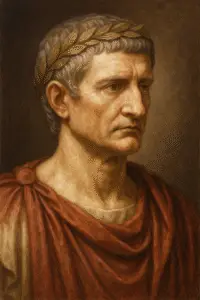
Tiberius Caesar was the Roman Emperor during Jesus’ ministry, whose reign provides a historical backdrop for key events in the New Testament, notably referenced in Luke as the time when John the Baptist began his ministry.

People, Places, and Things

Tiberius Caesar

Looks like you don't have a membership. This contnet is limited to members.

Join the conversation and start understanding the Bible.

People, Places, and Things

Caesar Augustus

In Luke’s Gospel, Caesar Augustus, Rome’s first emperor and bringer of the Pax Romana, is mentioned in connection with the census that brings Mary and Joseph to Bethlehem, highlighting how the emperor’s decree unknowingly fulfills God’s plan and contrasting Augustus’s claim to peace with the true peace brought by Jesus.

Annas and Caiaphas

Annas and Caiaphas, a powerful father-in-law and son-in-law duo who dominated the high priesthood in first-century Judea, embody how Rome’s occupation turned a sacred office into a tool of political control, with their influence culminating in the trial and crucifixion of Jesus.

Nazareth

Nazareth in the first century was a small, humble village in Galilee known as the hometown of Jesus, where he was raised and began his public ministry.

Zechariah

Zechariah, a righteous priest and husband of Elizabeth, is struck mute for doubting the angel’s promise but regains his speech when he faithfully names his son John, proclaiming God’s salvation in the Gospel of Luke.

Simon (Peter)

Simon Peter was a Galilean fisherman called by Jesus to be a foundational disciple and leader of the early church, known for his passionate faith, transformation, and close relationship with Jesus as portrayed especially in the Gospel of Luke.

The Temple in Jersualem

The Jerusalem Temple in the first century was the spiritual, cultural, and architectural heart of Jewish life, rebuilt by Herod into a magnificent complex that symbolized God’s presence, united a dispersed people, and ultimately became a focal point of both worship and conflict until its destruction in AD 70.