Houses (Jewish)

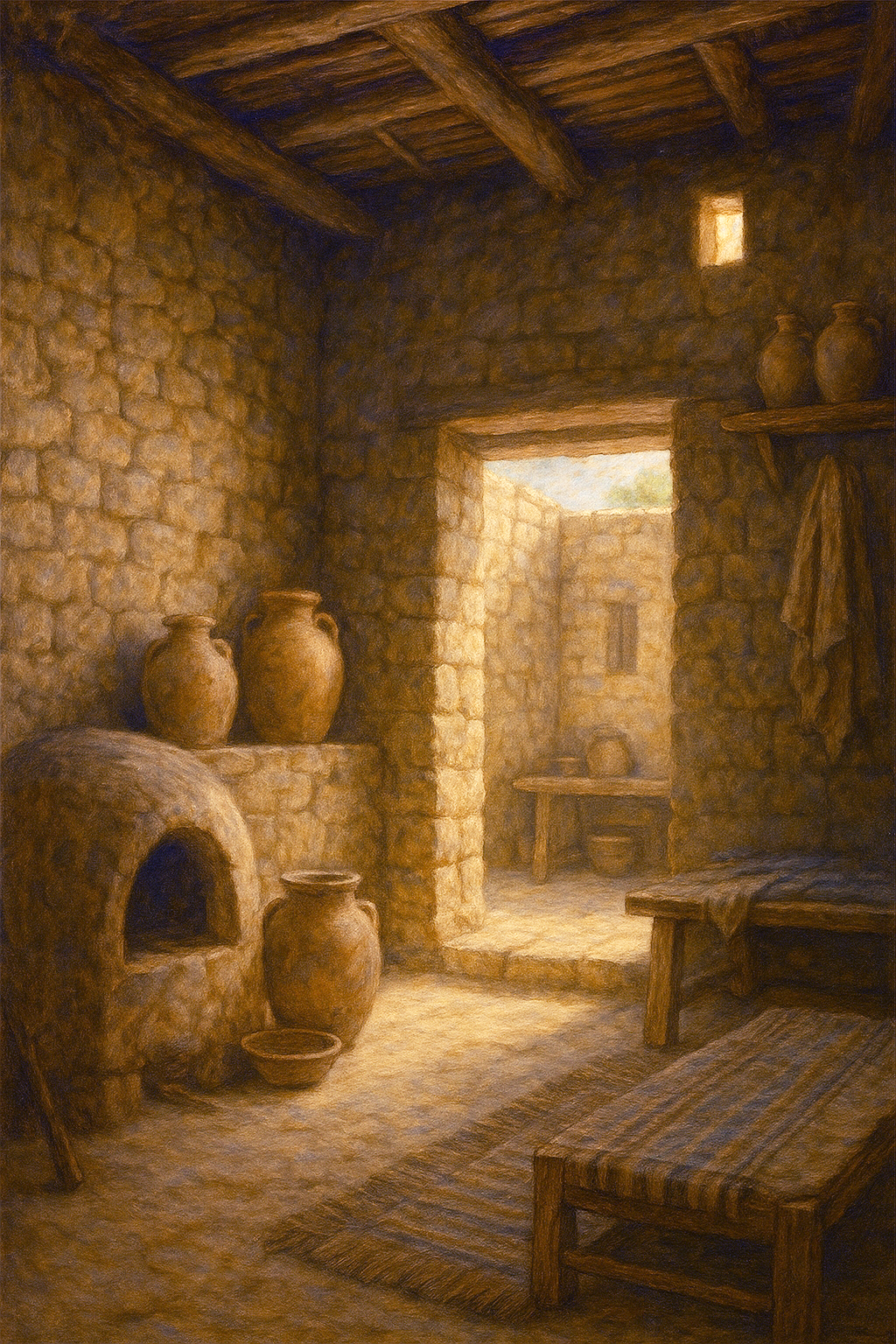
First-century Jewish homes in Galilee were modest, stone-built dwellings centered on family life, purity practices, and hospitality—simple yet deeply woven into the social and spiritual world reflected in the Gospel of Luke.

People, Places, and Things

Houses (Jewish)

Looks like you don't have a membership. This contnet is limited to members.

Join the conversation and start understanding the Bible.

People, Places, and Things

Houses (Jewish)

First-century Jewish homes in Galilee were modest, stone-built dwellings centered on family life, purity practices, and hospitality—simple yet deeply woven into the social and spiritual world reflected in the Gospel of Luke.

Capernaum

Capernaum was a working-class Jewish village on the northern shore of the Sea of Galilee that served as Jesus’ primary base for ministry, featuring a significant synagogue where He taught and performed miracles amid a community facing spiritual conflict and social challenges.

Leprosy

In the Gospel of Luke, leprosy—once a condition demanding priestly examination, isolation, and ritual cleansing under Mosaic law—becomes a powerful sign of Jesus’ authority to restore both body and community, as he touches the unclean, heals them instantly, and fulfills the law’s promise of true purification.

Synagogues

A synagogue was a local Jewish community center for worship, Scripture reading, and teaching, playing a vital role in religious and social life during Jesus’ time.

Herod Philip

Herod Philip the Tetrarch (4 BC–AD 34), son of Herod the Great, ruled peacefully over Ituraea and Trachonitis, is mentioned in the Gospel of Luke for historical context, and must be distinguished from his half-brother Philip I, the first husband of Herodias and father of Salome.

Zechariah

Zechariah, a righteous priest and husband of Elizabeth, is struck mute for doubting the angel’s promise but regains his speech when he faithfully names his son John, proclaiming God’s salvation in the Gospel of Luke.