Jerusalem

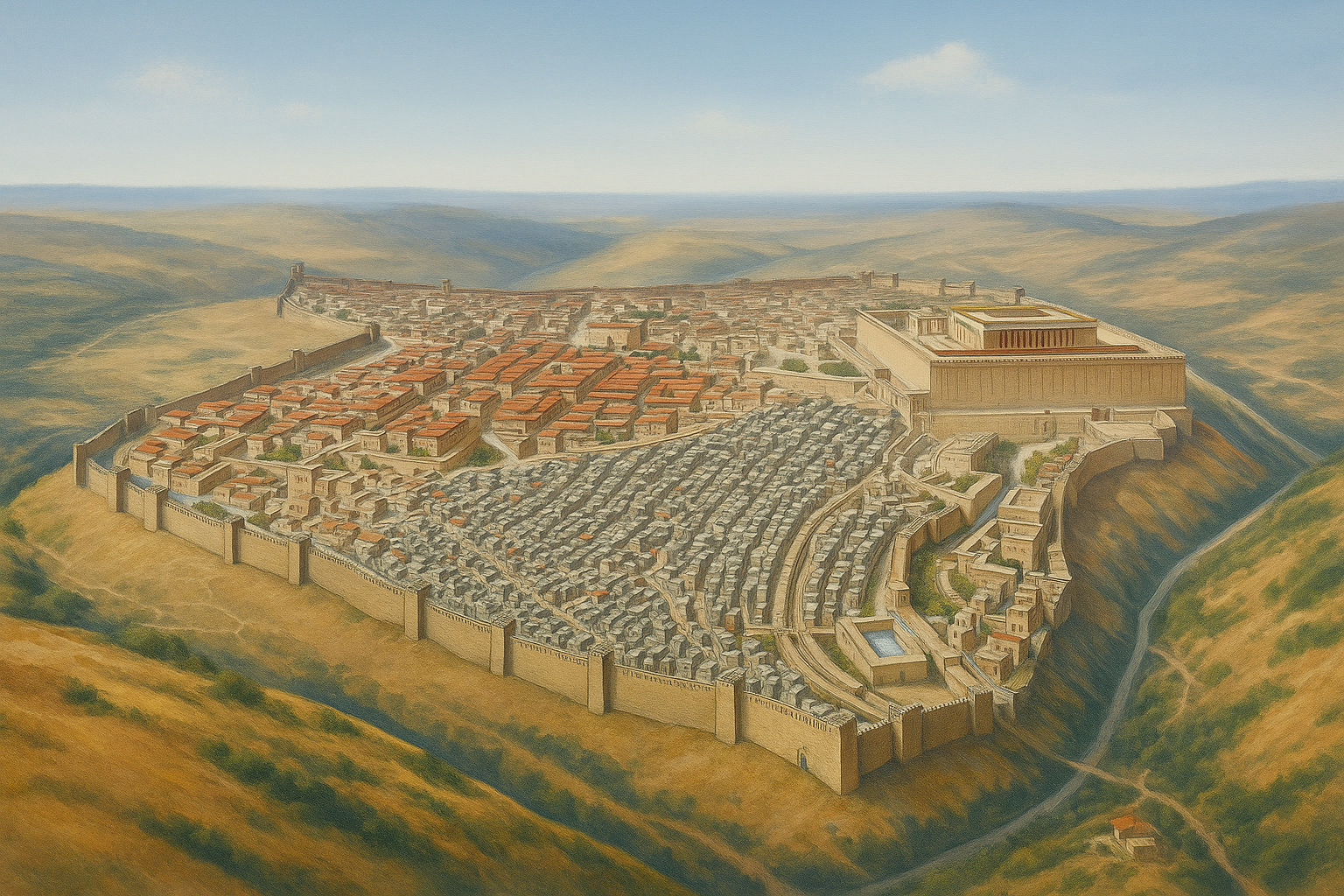
In the first century, Jerusalem was the religious and cultural heart of Judaism, the political flashpoint of Roman-occupied Judea, and the pivotal stage for events that shaped both Jewish and Christian history.

People, Places, and Things

Jerusalem

Looks like you don't have a membership. This contnet is limited to members.

Join the conversation and start understanding the Bible.

People, Places, and Things

Nazareth

Nazareth in the first century was a small, humble village in Galilee known as the hometown of Jesus, where he was raised and began his public ministry.

Theophilus

Theophilus, likely a wealthy patron or high-ranking believer, is the person to whom Luke dedicates his Gospel and Acts, addressing him as “most excellent” and aiming to provide a well-ordered account to strengthen his faith.

Herodias

Herodias—granddaughter of Herod the Great, mother of Salome, and later wife of Herod Antipas—used dynastic marriage to pursue rank in the early 1st century AD, provoked John the Baptist’s condemnation and death, and ultimately followed Antipas into exile in AD 39.

Annas and Caiaphas

Annas and Caiaphas, a powerful father-in-law and son-in-law duo who dominated the high priesthood in first-century Judea, embody how Rome’s occupation turned a sacred office into a tool of political control, with their influence culminating in the trial and crucifixion of Jesus.

Bethlehem

Bethlehem in the first century was a small, humble town in Judea known as the city of David, historically and prophetically significant as the prophesied birthplace of the Messiah, which Luke highlights to show Jesus’ fulfillment of Old Testament promises through His birth in this modest setting.

Quirinius (Governor of Syria)

uirinius was the Roman governor of Syria known for conducting a census around AD 6, which plays a significant historical and theological role in Luke’s account of Jesus’ birth, illustrating God’s sovereignty working through Roman political events despite controversies over the timing and historical details.